Two cemeteries in the same neighborhood, two different rule books. How to read them before you buy
A stone approved at one Toronto cemetery can be refused at another a few blocks away, and the reason is sitting in a filed bylaw you can ask for in writing.
One reader's working-out of how Ontario cemetery operators approve grave monuments, what the bill is actually made of, and which decisions can still be changed once the stone is standing.
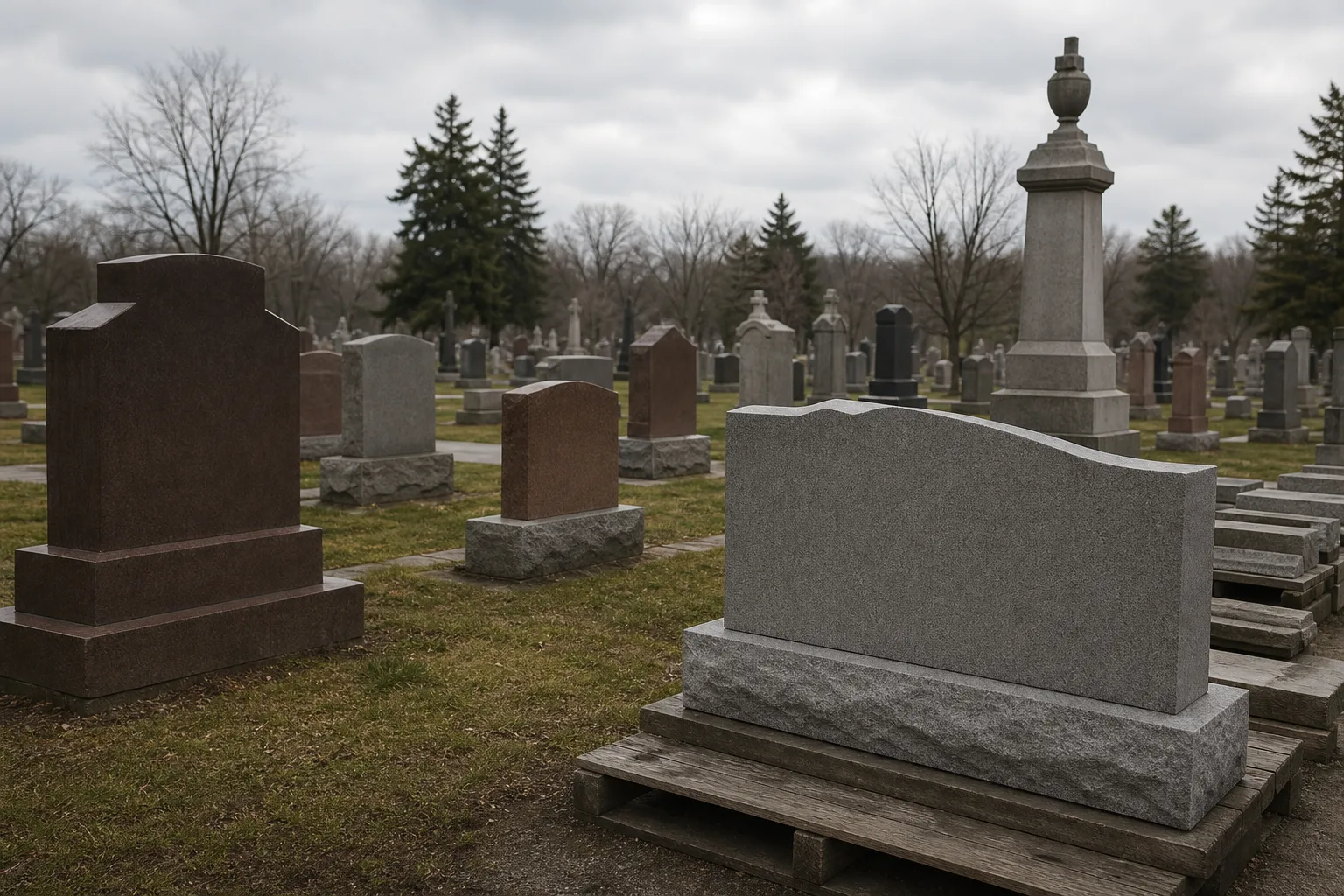
Each licensed Ontario cemetery operator files its own bylaw under the Funeral, Burial and Cremation Services Act. That document, not the dealer's catalog or a photograph of a neighboring grave, determines what can be installed.
A family bought an upright granite monument, forty-two inches wide and thirty inches tall, on the strength of a photograph taken at the cemetery where the grandfather was buried in 1994. The interment rights they held, however, were in a different cemetery about a ten-minute walk away, bought two decades later during a different set of circumstances, and the section they owned was a flat marker section. The stone was already cut and lettered when the cemetery office refused the installation permit. Nothing about the monument was defective. It simply did not belong in that part of that ground.
Where the rule actually lives
Every licensed cemetery operator in Ontario keeps bylaws filed under the Funeral, Burial and Cremation Services Act, and those bylaws, not the sales counter and not the monument dealer's catalog, decide what may be set on a grave. The Act is provincial and uniform; the bylaws written underneath it are not. A municipal cemetery, a congregational burying ground and a privately held corporate cemetery can sit within a few blocks of each other and permit three different families of memorial, because each operator wrote its own document, filed it, and enforces it grave by grave. The filed version is the one that counts.
That distinction matters more than most buyers expect, because the operator's staff often describe the rules from memory, accurately in outline and imprecisely at the margins. Memory covers the common cases. It does not reliably cover the width cap on a companion base in a section that was replanned in the 1970s, the granite-only restriction that excludes marble and limestone, or the separate approval a ledger stone requires because of its weight and its effect on future openings. Ask for the document. It exists, it is meant to be available, and reading it takes about fifteen minutes.
What differs between operators, and why
Municipal grounds tend to be organized around maintenance cost, which produces large flat marker sections where crews can mow in a straight line without trimming around uprights. Religious cemeteries usually carry doctrinal and community expectations into the bylaw: uniform materials, a required symbol or its prohibition, Hebrew or Italian or Portuguese inscription conventions, sometimes a rule that every stone in a row match its neighbors in height. Private operators frequently sell sections by design tier, so an upright section commands a higher interment rights price than the flat section that begins forty feet away. None of these is arbitrary. Each traces back to how the ground is run.
The specific caps a careful reader looks for are height above grade, overall width including the base, minimum and maximum thickness, permitted materials, foundation depth and who pours it, and whether benches, ledgers, vases, borders and plantings are allowed at all. Benches in particular are often restricted to designated areas or to double-depth lots, because a bench occupies ground the operator may need for a second interment. Ledgers, which cover the full grave, sometimes require a separate engineering allowance. A monument approved on width can still fail on material, and a stone approved on material can still fail on placement.
Getting the bylaw in writing before you shop
Call the cemetery office, give the section, lot and grave numbers exactly as they appear on your interment rights certificate, and ask for the current filed bylaw plus any section-specific restrictions applying to that grave. Ask for it by email so it is dated and attributable. Then ask a second question, which is whether the section has been reclassified since the rights were purchased, because older certificates sometimes predate a change. Take the document to the monument dealer, not the other way around. A dealer working from the filed text will quote a stone that passes on the first submission.
Price disclosure is worth the same discipline. The Federal Trade Commission is responsible for how funeral goods and services must be itemized for consumers, and the habit it encourages, an itemized written price before money moves, works just as well against a monument invoice that folds foundation, lettering, delivery, permit fee and care fund contribution into one number. Ask which of those the cemetery bills and which the dealer bills. Ask what happens to the deposit if the design is refused.
When the stone is already cut
The family with the forty-two-inch upright kept the monument. The dealer proposed a re-cut: the die was reduced and set flush into a new granite ledger sized to the section's flat marker limits, with the original lettering preserved and one inscription line moved. It cost real money, less than a second stone, and the permit issued in a week. Ask the operator whether a variance exists before you assume it does not, because some bylaws allow a written exception in a section transitioning between styles. Get the approval in writing, name the grave on it, and keep it with the certificate.